


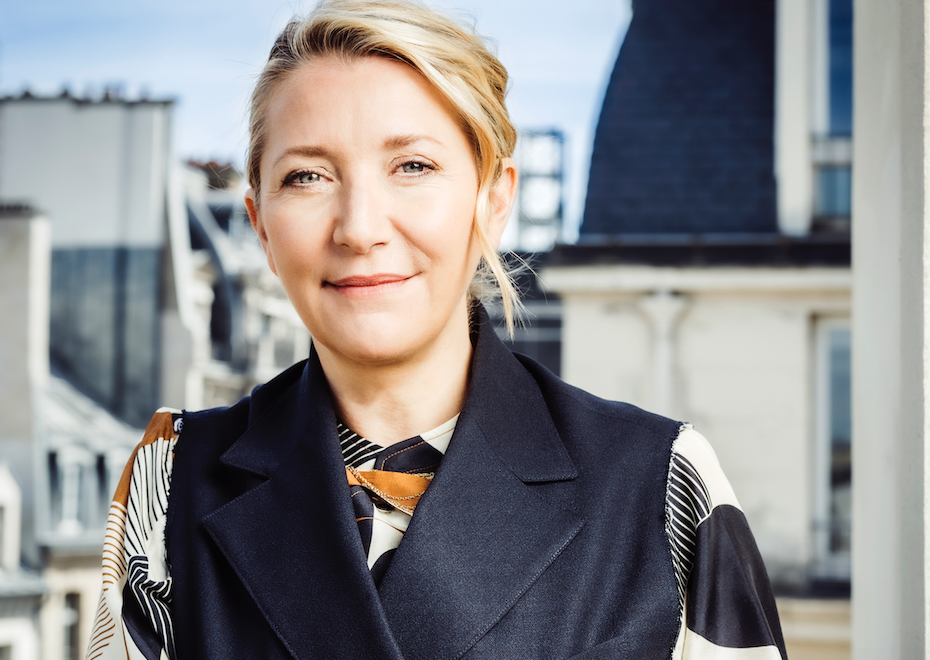
With over two-and-half-decades working at the highest ranges inside the fragrance industry, think about Frenchwoman Léa Vignal-Kenedi as one in every of its foremost powerbrokers. She started her profession in the Nineties with Yves Saint Laurent Beauté and it’s the place she learnt a few of her elementary guiding rules. “I joined the fragrance division of YSL in 1997. At the time, Yves Saint Laurent was alive and really concerned in the total artistic course of. He was actually one in every of the most creative style designers, taking inspiration from the likes of Van Gogh and different nice painters. It’s there that I learnt easy methods to join an inventive aspect with present tradition, after which translate that basically right into a product,” says Vignal-Kenedi.
It’s an expertise that has proved invaluable in her current function as the managing director for fragrances at Cartier Parfums, the place she works as the enterprise brains behind the French firm’s global fragrance division. She oversees features together with advertising and marketing, operational methods and industrial activations for all its fragrances.
At Cartier, Vignal-Kenedi works alongside the legendary nostril of the model, Mathilde Laurent. “We are the solely jewelry home to have an in-house perfumer. I work carefully with Mathilde and a artistic staff inside our accent design studio,” explains Vignal-Kenedi.
She notes that the total course of from thought to bottle-on-the-gilded-shelf takes a couple of years. At Cartier, a model that traces its roots again to the 1800s and a fragrance division whose historical past goes again to the Eighties, the maison doesn’t reinvent the wheel every time it debuts a fragrance – one other trait she learnt from Yves Saint Laurent. “When he (YSL) thought of a brand new undertaking, he would first undergo the model’s archives – and that’s precisely what we do at Cartier too. Today, once I begin the technique of a brand new fragrance with my staff, we begin with the historical past of the model, and have a look at the archives of the maison.”
She cites the instance of La Panthère de Cartier, one in every of its best-selling collections. “When we determined to relaunch La Panthère – it beforehand existed in our portfolio – we actually needed to proceed to inform its story, however make the product related to the current time. We wanted to make the consumer uncover what are the animal notes in perfumery and what is the idea of femininity at Cartier. And so Mathilde labored round the idea of felinity – feline and floral. That is how the thought for it happened.” It got here to market in 2014, however the course of to get it out of the door, she explains, took 4 years. The challenges had been on two fronts. Mathilde who was engaged on the anomeric aspect of the fragrance was constrained by the undeniable fact that latest rules prohibited her from utilizing sure pure elements that had been allowed beforehand, and so she needed to develop artificial alternate options. On the different hand, Vignal-Kenedi’s function needed to discover a producer who might execute the bottle design which is sculpted from the inside. The duo persevered and Vignal-Kenedi is assured that the La Panthère will turn out to be a permanent legacy fragrance for the model.
Revisiting its archive is one thing that Cartier did to good impact earlier this 12 months too with one other widespread males’s fragrance known as Déclaration. The model went again to its authentic Déclaration from 1998 to debut the Déclaration Haute Fraicheur earlier this 12 months which is a variation on the basic.
Vignal-Kenedi leads the global technique when figuring out the messaging for worldwide markets and says that China and the US are the fragrance markets which are on the rise. “The European area is nonetheless one in every of the largest [fragrance markets], however China is actually choosing up. We’ve been anticipating China to turn out to be a key participant for years. It’s not a shock that it is occurring now, however the charge at which it is occurring is stunning, particularly inside the final two years. China is anticipated to turn out to be both the largest or the second-biggest fragrance market after the US by 2025,” forecasts Vignal-Kenedi.
As she notes, the tradition and motivations for shopping for fragrances is starkly totally different in the US and China and one in every of her foremost duties is to faucet the zeitgeist in every of these two markets. “The fragrance tradition in the US comes from the likes of Bath & Bodyworks and so it’s very clear, pure and recent. In China, shoppers are wanting for extra refined and signature fragrances, for singularity and the energy of proudly owning a bit of the Maison Cartier.”
Apart from the US and China, the market that Vignal-Kenedi is aware of has super potential is the Middle East. “At the begin of my profession, I used to be answerable for the Middle East area for Shiseido, and Jean Paul Gaultier. What strikes me about this area is the skill of our companions right here to hear, study and implement in a short time all the experience and the information we give them as regards to the execution of the plans,” says Vignal-Kenedi. She says Cartier fragrances have had appreciable success in its regional markets together with the UAE and Kuwait, although Cartier’s push in Saudi Arabia is poised to develop quickly.
“We’re going to have a really profitable 12 months in Saudi. We will broaden our community and have pop up fragrance shops [in Saudi] too. Next 12 months, we’re planning to current the unidentified scented object experiential idea for Saudi too,” she says a couple of idea that includes a floating cloud of fragrance seen in an set up in the Palais de Tokyo in Paris in 2017 after which in the Louvre Abu Dhabi in 2019 months earlier than the pandemic struck. Cartier’s deal with the area additionally signifies that particular limited-edition variations of its iconic perfumes like La Panthère have been created particularly for the Middle East.
Read: Voices from the prime: Sophie Doireau, CEO, Middle East, India and Africa, Cartier
Among the key challenges cropping up for Vignal-Kenedi and her staff is tackling the problem of sustainability, by way of the use of elements in addition to the packaging itself. “With the Rivieres assortment, we achieved a formulation with plant-based elements containing no synthetic colors. We needed to display that it is potential to create lovely tasks whereas being accountable. In about 18-20 months, 100 per cent of our pillar traces we make may even be utterly refillable and reusable. The problem right here is to make sure the high quality of the bottle is maintained so that you could reuse it so long as you need to.”
One of her foremost battles is at the moment resisting the noise inside the industry that is pushing for the unique use of pure elements in perfumes – one thing that she’s clear is an impractical goal. “Synthetic molecules in perfumes will at all times exist. We must be true to what perfumery is…and perfumery is chemistry. Chemistry is about making the finest with a mixture of supplies which are artificial in addition to pure. The goal is actually to search out the proper stability between the two,” she presents.
Vignal-Kenedi’s technique for the model means additionally wanting past fragrances themselves and into product diversification methods – an excellent instance might be present in the Les Nécessaires à Parfum Cartier circumstances that had been launched in May final 12 months and designed to suit 9 Cartier fragrances, together with La Panthère, Déclaration, Pasha Edition Noire, Oud & Santal, and Pur Magnolia, amongst others. With the accent, as with the thought of reusable bottles too, Cartier is promoting not practically a fragrance that dissipates over a day, however a tangible piece of the maison itself.
https://gulfbusiness.com/how-cartiers-lea-vignal-kenedi-is-leading-the-way-for-the-global-fragrance-industry/