


:quality(70)/cloudfront-eu-central-1.images.arcpublishing.com/businessoffashion/DUBNHR6LXJFT7DE25T4PFHXWOE.jpg "‘Lipstick Effect’ Starts Fading for Consumer Beauty Groups")
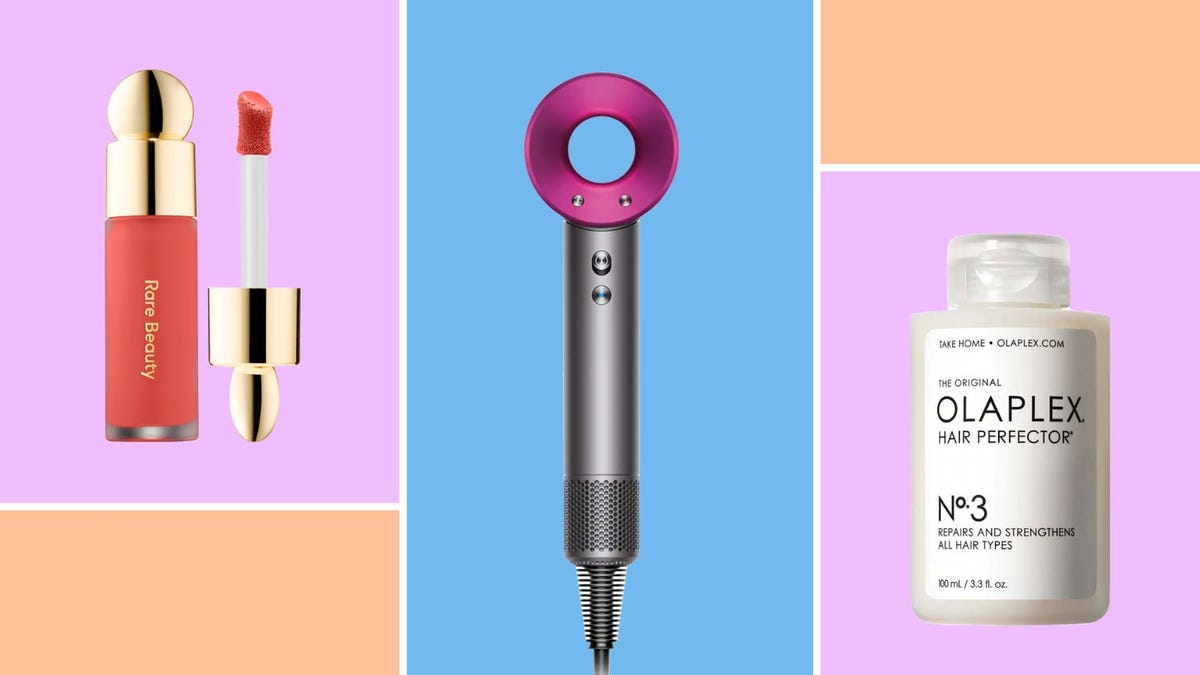
In instances of financial turmoil, magnificence customers nonetheless wish to deal with themselves – they only do it moderately. In lieu of Botox therapies or physique contouring to elevate their spirits, patrons will as an alternative splurge on a $30 face masks or tube of mascara. Beauty firm bosses name this the “lipstick impact,” and use it to persuade buyers of their enterprise’s resilience.This yr, nonetheless, persistently excessive inflation and gloomy financial system forecasts haven’t led to a growth in impulse buys. In the US, there was a 2.1 p.c drop in gross sales of face care objects within the 12 months to Oct. 1 in comparison with a yr earlier, NielsenIQ estimates, at the same time as inflation helped push up gross sales in greenback phrases. And in Europe, a couple of in 5 customers anticipate to spend much less on make-up and skincare within the coming months, in line with McKinsey & Co. Inc analysis.Cosmetics makers are starting to really feel the squeeze. L’Oréal SA shares suffered the largest fall in seven months final week after the group mentioned its luxe division, which incorporates manufacturers like Lancome and Shu Uemura, grew solely 4.6 p.c within the third quarter. This marks the primary time since 2020 that the posh unit’s progress fell behind L’Oréal’s mass market division, which produces traces like Garnier. Any signal of softer gross sales at US rival Estée Lauder, which reviews its quarterly earnings on Nov. 2, may spook the market additional.For massive corporations, having a variety of merchandise at completely different worth factors has helped cushion the monetary blow. L’Oréal CEO Nicolas Hieronimus made this case throughout a name with buyers on Oct. 20, when he noticed that though Yves Saint Laurent merchandise proceed to promote properly, “we now have additionally Maybelline and L’Oréal Paris for those that can’t afford an costly mascara.” While the general magnificence market is rising at 6 p.c in worth phrases, he noticed, L’Oréal is increasing at twice that tempo.Less diversified companies are struggling probably the most. Cult hair care model Olaplex, a favourite amongst social media magnificence influencers, is amongst these dropping its shine. Olaplex Holdings, whose shampoo sells for $28 a bottle, downgraded its outlook final week, inflicting shares to plunge 57 p.c. On Thursday, Nivea proprietor Beiersdorf mentioned that gross sales of its dear La Prairie skincare line grew simply 5.5 p.c within the first 9 months of the yr, having beforehand reached 20 p.c annual progress. The firm’s general gross sales rose 11.1 p.c.Higher SpiritsIn rosier financial instances, premium pores and skin and haircare are booming client classes, offsetting flagging progress elsewhere. While there are exceptions that also show this rule – together with Unilever, whose status magnificence enterprise loved one other quarter of double-digit progress – extra client items teams try out new methods to spice up profitability.To prop up their high traces, Nestlé and Unilever have experimented with “premiumisation” – selling pricier variations of merchandise similar to mayonnaise and make-up. But that technique additionally has its limits. Sales of Nestlé’s premium Nespresso espresso pods fell this yr, and final week the corporate admitted that prospects are opting for cheaper merchandise. Hieronimus, the L’Oréal CEO, mentioned he had seen the identical amongst UK patrons buying for skincare merchandise.One sector, nonetheless, has confirmed remarkably resilient. Spirit corporations like Diageo and Pernod Ricard often is the largest beneficiaries of the “lipstick impact,” a time period coined by former Estée Lauder chairman Leonard Lauder to clarify why lipstick gross sales shot up in the course of the 2001 recession. After all, like lipstick, individuals flip to alcohol as a supply of cheer and confidence when instances are powerful.In addition to a post-lockdown increase and the return of journey, distillers have additionally benefited from the truth that their merchandise don’t make up a big portion of family spending. In the US customers largely drink spirits on particular events, and solely spend a mean of $4 every week on them, in line with Numerator Insights. That might shield gross sales – for now.“We haven’t seen any shift in that underlying need of customers to deal with themselves to spirits,” mentioned Alicia Forry, an analyst at Investec. But, she added, gross sales seemingly “will gradual a bit as vitality prices actually begin to hit disposable earnings extra considerably.”By Dasha Afanasieva
https://information.google.com/__i/rss/rd/articles/CBMib2h0dHBzOi8vd3d3LmJ1c2luZXNzb2ZmYXNoaW9uLmNvbS9hcnRpY2xlcy90b3BpY3MvYmVhdXR5LXJlY2Vzc2lvbi1saXBzdGljay1lZmZlY3QtbG9yZWFsLWVzdGVlLWxhdWRlci1vbGFwbGV4L9IBfmh0dHBzOi8vd3d3LmJ1c2luZXNzb2ZmYXNoaW9uLmNvbS9hcnRpY2xlcy90b3BpY3MvYmVhdXR5LXJlY2Vzc2lvbi1saXBzdGljay1lZmZlY3QtbG9yZWFsLWVzdGVlLWxhdWRlci1vbGFwbGV4Lz9vdXRwdXRUeXBlPWFtcA?oc=5